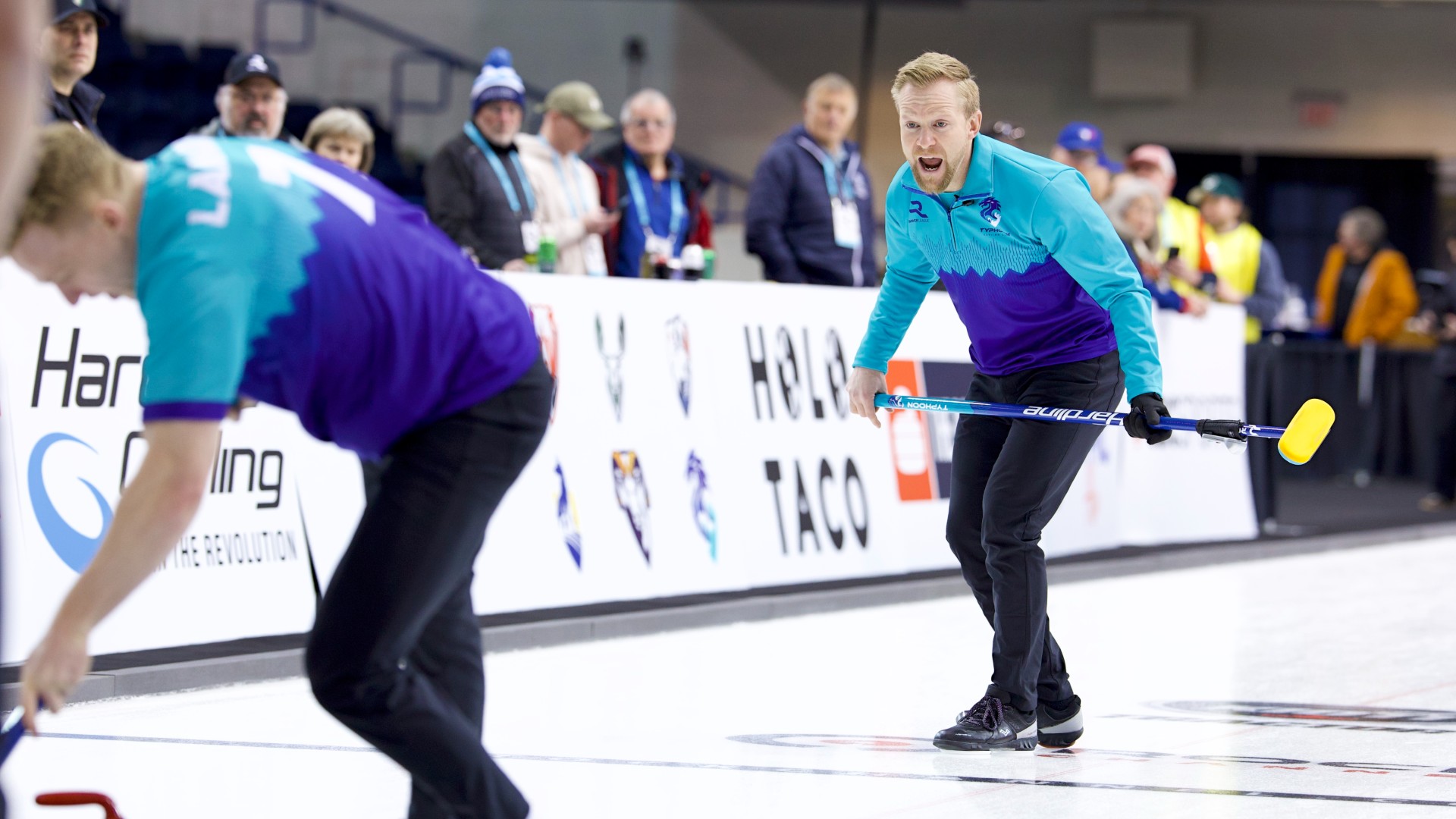
Across time zones: How Olympic curlers Bobby Lammie and Yeeun Seol make an elite curling romance work

February 13, 2026
Jolene Latimer
When Great Britain's Bobby Lammie and Korea's Yeeun Seol first crossed paths on the Grand Slam of Curling circuit three years ago, neither was looking for a long-distance relationship that spanned continents, languages, and Olympic dreams.
They were just two elite curlers moving through the same competitive orbit — different teams, different countries, the same rinks.
They were both at a point in their careers when both were fully committed to high-performance curling.
The introduction itself is still a point of playful disagreement. Lammie insists Seol was the first to reach out on social media. Seol is confident he slid into her DMs. “She must be right,” Lammie jokes.
What’s clear is that once the conversation started, neither wanted it to stop. At first, most of their connection lived online — messaging and video calls bridging not just the distance between Scotland and Korea, but an initial language barrier that made in-person dating feel intimidating.
“I really enjoyed talking to him, and I knew he was a genuine person,” Seol said. “It turned out to be the best decision of my life.”
They’ve now been together for just over two and a half years, building a relationship that unfolds in tournament hotels, practice rinks and across time zones.
During the season, the only stretches they consistently see each other in person are at Grand Slam events, when their competitive schedules overlap.
They like to keep those weeks simple.
“We like grabbing food together, watching each other’s games, and just trying to support each other the best way we can,” Lammie said.
Outside of that, they rely on constant communication — texts, video calls and quick check-ins that have become routine enough to feel normal, even when weeks pass without being in the same place.
“All these long periods without seeing each other aren’t usual for relationships but it’s something that we’ve always encountered in our relationship so it feels somewhat normal for us,” Lammie said.
That rhythm works, in large part, because they share the same sport — and understand its pressures instinctively.
“Having a partner who understands the realities of elite sport makes a huge difference,” Lammie said. “I don’t have to explain the pressure or the sacrifices — she already gets it.” That understanding shows up most clearly in how they support each other while competing.
“Especially being two high level curlers, support is knowing when to give input and when to give the other person space. This is one thing that’s worked really well in our relationship and when one person is competing, you give them the space to do that and follow whatever routine works best for them. Of course, we are invested in each other's performance, but it’s easy to get overly invested. So we try to focus on other things outside of competition and typically only give input or feedback when asked,” said Lammie.
There’s no over-analysis. Their strength is in the amount of space they’re able to create for each other.
“We respect each other’s routines,” Seol said. “We usually just share how training or games went.” For Lammie, that balance has been crucial — especially after tough losses. “She doesn’t try to fix anything,” he said. “She just offers a funny and safe place that helps me forget the loss quicker. A loss at the time always feels like the worst thing imaginable but when we’re back together she quickly makes me realise that there’s more important things.”
When both are chasing performance at the same time, their approach is simple: the athlete competing takes priority. Space is given freely. Support is constant, but quiet.
“This is one thing that’s always came quite naturally to us,” Lammie said. “We’ve always just given each other space, especially when competing to go and focus on what they need to with their team and coaches. It doesn’t matter if one of us are competing or both of us at the same time, the process is the same and our own individual needs take priority during that period.”
That dynamic has made curling feel more sustainable for both of them — a way to care deeply without letting the sport consume everything.
“When I see Bobby doing well in his games, it motivates me to become a better player,” Seol said.
As they are now Cortina for the 2026 Winter Games, the future remains intentionally open-ended.
Long-distance realities mean one of them will eventually have to move. They talk about it honestly, without rushing the answer.
“For now, we’re just trying to enjoy curling for what it is and get the maximum out of it,” Lammie said. Seol agrees. “We don’t know what the future holds, so I try to enjoy and celebrate every moment we have.”
Still, she allows herself one small dream beyond national colours and separate teams, which just might come true when they'll team up together on Rock League's Typhoon Curling Club later this year. “Someday,” she said, “I’d love to play mixed doubles with him.”